


Why Advocacy Matters: Bringing the CMD Community’s Voice to the Table

From national conversations about healthcare innovation to discussions with federal regulators and rare disease leaders, advocacy helps ensure that the people most affected by research, policy, and care have a voice in shaping what comes next.
As someone living with congenital muscular dystrophy (CMD) and serving as Cure CMD’s Community Engagement Coordinator, advocacy is personal to me. I understand firsthand how research, access to care, and decisions made beyond our community impact individuals and families living with CMD.
This October, I’m attending three important events on behalf of Cure CMD, bringing our community’s perspective into conversations about rare disease research, treatment development, and patient access.
Bringing the Affected Individual’s Perspective to National Conversations
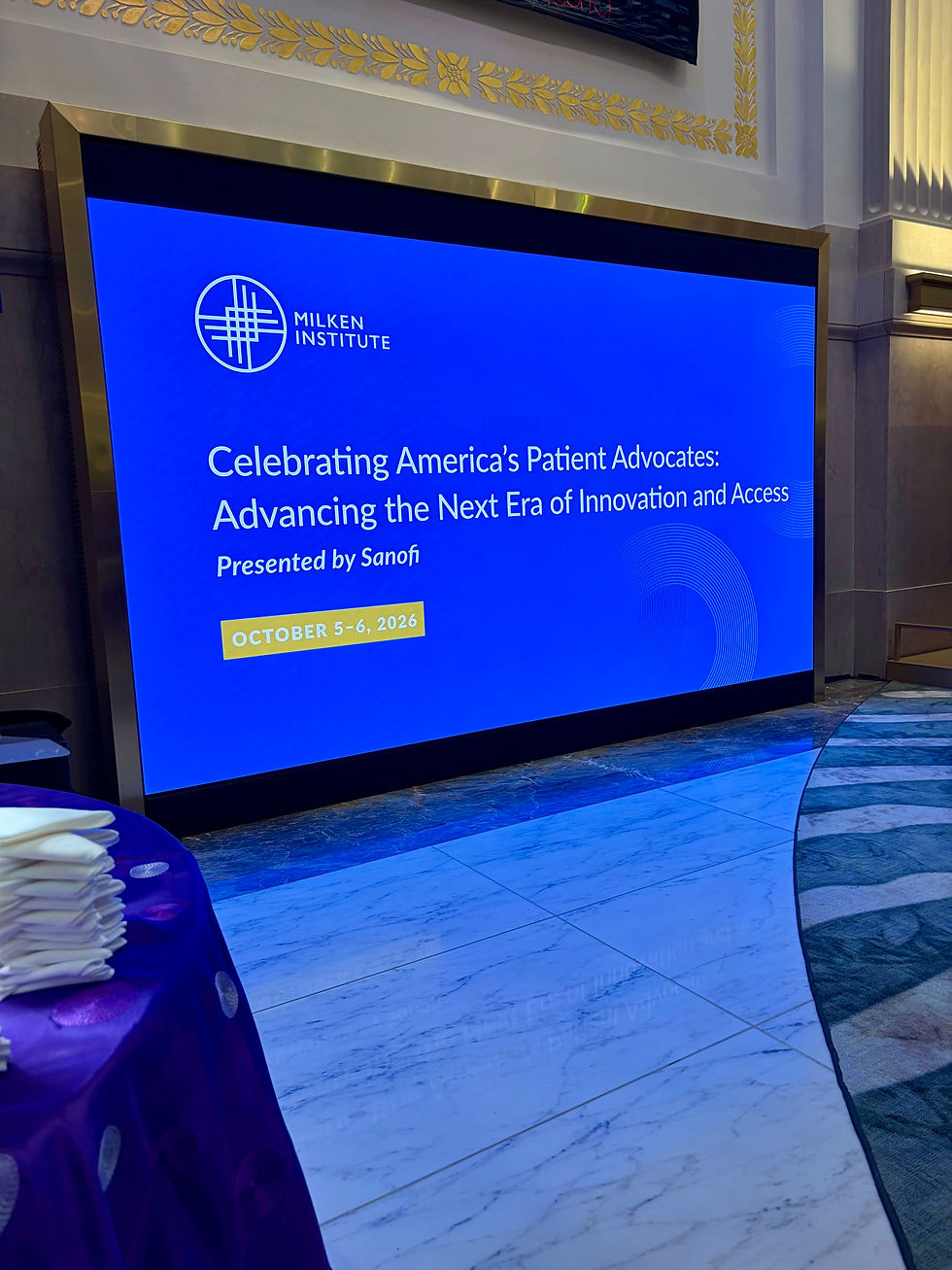
At the 2026 Milken Institute Patient Advocacy Forum in Washington, DC, about 200 patient advocates, researchers, healthcare leaders, and industry representatives came together to discuss biomedical innovation, access, and the evolving role of patient advocacy organizations. The forum featured influential voices, including Francis Collins, former director of the National Institutes of Health (NIH), and ALS advocates Brian Wallach and Sandra Abrevaya, who discussed how a personal health journey can become a broader public mission. Leaders from the Michael J. Fox Foundation, Cystic Fibrosis Foundation, Breakthrough T1D, and Friends of Cancer Research also shared their experiences in advancing research and driving change.
One of my biggest takeaways was the reminder that people living with rare diseases aren’t simply beneficiaries of progress in healthcare. We are helping drive it.
Affected individuals and their families have an important role in shaping what innovation looks like, how it reaches patients, and what meaningful access actually means. We understand the daily realities of living with a condition, the gaps in care, and the outcomes that matter most. If we believe that, patient organizations must be treated as partners in innovation, not simply as voices to consult along the way.

But there is another side to this conversation. Rare disease organizations already do so much: building communities, supporting families, funding research, informing policy, and contributing to drug development. Yet one reality that came up throughout the day is that these organizations are often asked to help transform healthcare without giving them the resources to do it. The expertise is there. The lived experience is there. The commitment is there. But expertise and passion alone cannot fund the work.
Later in October, I’ll attend two additional events focused on the patient voice and the future of rare disease care. The Patient Voice in Rare Disease Medical Product Development meeting, held in collaboration with the U.S. Food and Drug Administration (FDA), will bring together leaders from the FDA’s drug, biologics, and medical device centers to explore how patient perspectives can inform medical product development.
The National Organization for Rare Disorders (NORD) Rare Diseases and Orphan Products Breakthrough Summit brings together more than 900 leaders across rare disease advocacy, research, and healthcare. The agenda includes FDA Acting Commissioner Kyle Diamantas, J.D., NIH Director Jay Bhattacharya, M.D., Ph.D., and a discussion around the next decade of rare disease medicine moderated by CNBC’s Becky Quick, featuring leaders from across the pharmaceutical and rare disease sectors.
Although each event has a distinct focus, they raise an important question: how can we ensure that the people whose lives are affected by these decisions are included in making them?


What This Means for the CMD Community
For those of us living with CMD, progress means more than scientific breakthroughs. It means advancing research toward treatments, improving access to quality care, supporting families, and ensuring our community’s needs are understood by the people making decisions that affect us. People living with rare diseases need to be part of the conversation from the beginning, helping shape research priorities, clinical trials, care guidelines, policy, and the systems that determine whether innovation reaches the people who ultimately need it.
It also means recognizing patient organizations as essential partners. They connect communities, advance research, elevate the lived experience, and help identify unmet needs that might otherwise be overlooked. Most importantly, sustaining this work requires meaningful investment in patient organizations, alongside continued collaboration.
How You Can Help Move Advocacy Forward
Advocacy isn’t limited to conferences or meetings with government representatives. Everyone in the CMD community has a role to play. Share your experiences, stay informed, engage with policymakers, and participate in advocacy opportunities when they arise. Every voice helps amplify our community’s needs and priorities.
There is still a lot of work ahead, but there is tremendous possibility and hope when lived experience is recognized as expertise, affected individuals are treated as true partners, and organizations have the resources to turn that expertise into action. I’m grateful for the opportunity to bring the CMD community’s perspective into these conversations and learn alongside advocates working to make healthcare and research more patient-centered, accessible, and equitable.
Our community should have a say in the future being built for us. Our experiences matter, our perspectives belong at the table, and together we can help shape a future that better reflects the needs and hopes of people living with CMD.
Get Involved in CMD Advocacy
Want to help make the CMD community’s voice heard? Get involved with Cure CMD’s advocacy efforts to help ensure that the experiences and priorities of people living with CMD shape the future of research, treatment, and care.
Visit curecmd.org/advocacy and fill out the form below.


