


Carsten Bönnemann Transitions to St. Jude Children's Research Hospital in Memphis, USA
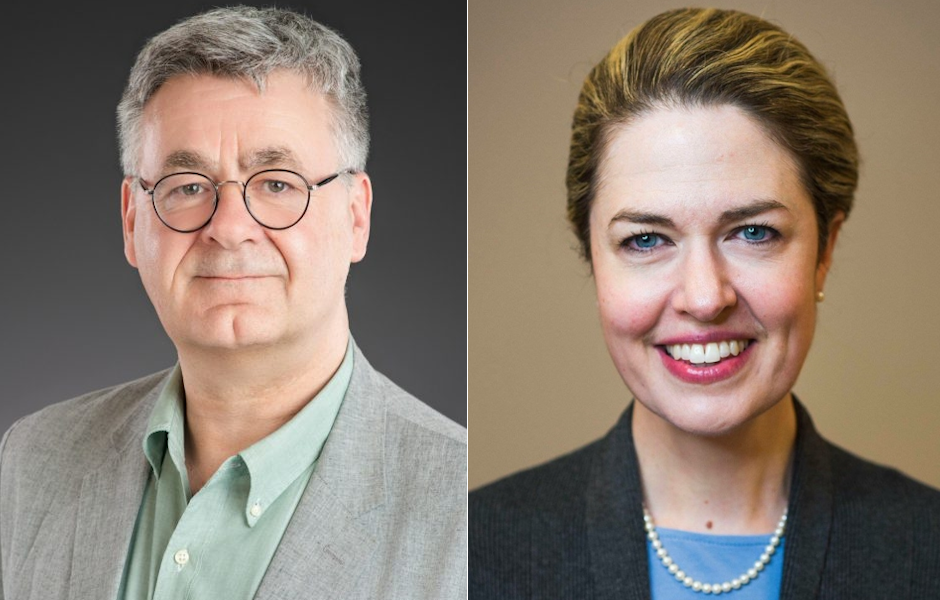
Dr. Carsten Bönnemann, a leading diagnostician and researcher for the CMD community, transitioned to St. Jude Children’s Research Hospital in Memphis, TN, USA, in March 2026. There, he will chair the newly created Department of Genomic and Translational Neuroscience, where he will advance research and therapeutic development for rare pediatric neurological disorders.
In 2002, Dr. Bönnemann joined the Children's Hospital of Philadelphia/University of Pennsylvania as Co-Director of the Neuromuscular Program and Director of the Neurogenetics Clinic. He moved to the National Institute of Neurological Disorders and Stroke (NINDS) within the National Institutes of Health (NIH) in 2010 as Senior Investigator and Chief of the Neuromuscular and Neurogenetic Disorders of Childhood Section.
Dr. Bönnemann’s leadership in the congenital muscle disorder space has been transformative. He and his team have advanced gene discovery, natural history studies, and early-phase clinical trials, all while mentoring the next generation of CMD clinicians and scientists nationally and internationally.
Dr. A. Reghan Foley, Senior Research Physician and congenital muscle disease specialist, who has worked with Dr. Bönnemann over the past two decades, will remain at the National Institutes of Health (NIH). She is now leading the Neuromuscular and Neurogenetic Disorders of Childhood Group with a continued focus on CMD clinical research. To provide clarity and reassurance during this transition, both she and Dr. Bönnemann shared their perspectives on what this change means for our community and for the future of CMD treatments.
Laying The Groundwork
Dr. Foley reflected on Dr. Bönnemann’s new role and the exciting potential to accelerate therapy development. “The opportunity at St. Jude came up for Dr. Bönnemann to really push forward the translation of promising preclinical/laboratory research to clinical trials,” she explained. “While his move marks a significant change, it also opens new opportunities for collaboration and innovation.”
Dr. Bönnemann described the move as a continuation of the work he has pursued throughout his career. “For me, the transition to St. Jude is really just a natural evolution of what I’ve always been doing,” he indicated. “With this new opportunity at St. Jude, I feel it elevates the work even more, because the mission of St. Jude is closely aligned with the mission of my group and Dr. Foley’s team.”
Reflecting on the goals of the newly created Department of Genomic and Translational Neuroscience, Dr. Bönnemann shared in a recent announcement from St. Jude Children’s Research Hospital: “The mission of this new department is to understand the unique genetic and molecular roots of these devastating disorders and conceptualize genetic precision therapies based on this knowledge.”
Although leadership of the Neuromuscular and Neurogenetic Disorders of Childhood Group at the NIH is transitioning to Dr. Foley, she and her team maintain a steadfast commitment to diagnostics and CMD clinical research. “We will continue to see patients with CMD under clinical study protocols. We will continue to focus on clinical trial readiness—studying natural history, validating outcome measures, and optimizing clinical care,” Dr. Foley noted.
Collaboration between institutions will be beneficial for the overall progress of CMD research. “We’ll be closely collaborating,” Dr. Bönnemann emphasized. “We can actually see higher numbers of patients and generate more data in a shorter period of time.” This ensures that families continue to benefit from expert guidance while essential groundwork for future therapies—such as understanding how CMD progresses and presents itself over time—remains a priority.
Emerging Progress
Several current research initiatives highlight that progress. Ready CMD LAMA2 is a prospective early natural history study for children ages 0-5 years with LAMA2-RD across 15 U.S. sites and led by Dr. Anne Connolly at Nationwide Children’s Hospital. The study helps clinicians better understand early disease progression and offers the opportunity to develop disease stage-appropriate outcome measures. The NIH team is also planning a CMD natural history study for COL6-RDs, LAMA2-RDs, and LMNA-CMD, generating data needed to optimize the design of future clinical trials for these CMD subtypes.
Reflecting on progress made during his time at the NIH: “We completed the first CMD-focused natural history study,” Dr. Bönnemann shared. “We’ve proven CMD diagnostics and identified new opportunities for therapy development.”
Beyond traditional assessments, researchers are exploring innovative methods to monitor CMD in less invasive ways. Advanced muscle imaging techniques, like specialized ultrasound and multispectral optoacoustic tomography, allow clinicians to observe muscle changes over time without repeated muscle biopsies.
Blood-based biomarkers are also being evaluated as potential outcome measures for treatment response, which may reduce the need for invasive procedures during clinical trials.
Collaboration Is Key
Collaboration remains central to both leaders. Dr. Foley’s team at the NIH and Dr. Bönnemann’s team at St. Jude will continue to work closely together. Dr. Foley underscored the NIH team’s success in conducting a phase 1 trial for CMDs: “We have proven to regulatory agencies that we can successfully recruit and run clinical trials in the CMDs.” Regarding promising preclinical research in the CMDs, she commented, “We are realistically optimistic that this research will be translated to clinical trials in the upcoming years.”
Dr. Bönnemann also emphasized the advantages of continued collaboration. “For the CMD Community, this means there are now two high-powered institutions behind Dr. Foley and myself to move the CMDs forward,” he explained. Building on the data emerging from the NIH’s laboratory, both teams will continue their focus to move research discoveries into clinical trials, ensuring our community’s clinical trial readiness. By sharing discoveries, patient samples, and insights, both teams can accelerate progress while keeping families informed, prepared, and at the center of research priorities.
A Hopeful Future
Acknowledging that progress in rare disease research can often feel slow, Dr. Foley offered a perspective grounded in decades of advancements. “It may feel slow, but we really are leagues ahead. We have come so far,” she reflected.
Dr. Bönnemann highlighted the importance of accurate genetic diagnosis as the field moves toward targeted therapies. “I want everyone living with CMD to have a precise genetic diagnosis—it’s the entry ticket to all future treatments, and also optimized care for these conditions.”
The CMD Community can be assured that the NIH team remains a consistent resource for expert care. “No matter where you are in the world, you will always have us as a point of reference. That will not change,” Dr. Foley shared. Families will also have the opportunity to see Dr. Bönnemann at St. Jude as the program expands. “St. Jude operates very, very similarly to NIH in that patients can visit, often without charge,” Dr. Bönnemann added. “It is a different part of the country, of course, but it’s not too difficult to get to. And I hope to see many of you at St. Jude as well.”
Our Community Makes It Possible
Both clinicians emphasized the essential role that the community plays in shaping research. By sharing experiences, participating in studies, or providing biosamples, we continue to guide research priorities and help ensure that future therapies will address what matters most. “The CMD family holds the ability to shape clinical trials from the beginning. Your voice is pivotal,” Dr. Foley highlighted.
For researchers, inspiration comes directly from those living with CMD. As Dr. Bönnemann shared, “It means everything to me. The inspiration for everything I do, and what continues to drive me every day. There would be no meaning in what we do if it wasn’t working with you guys.”
Small seed funding and donations from our community are critical to ensuring research accelerates toward treatments. “With generous support from the CMD community, Cure CMD often seed-funds early research, leading to breakthroughs that would otherwise never have come to light. By funding these kinds of investigations, we make it possible for our researchers to win subsequent funding from larger institutions like the NIH, FDA, and the MDA,” Rachel Alvarez, Executive Director of Cure CMD, explained. “Truly, every dollar makes a difference in our mission to identify treatments.”
Cure CMD is committed to keeping our community informed and involved in every aspect of research and clinical trial development. Dr. Bönnemann’s transition to St. Jude is both a milestone and an opportunity—a chance to strengthen collaboration, accelerate translational research, and continue support for our community with compassion, expertise, and hope.
Explore Cure CMD’s Research Strategy and our research portfolio for the latest funded projects, and be sure to register in the Congenital Muscle Disease International Registry (CMDIR) to stay informed about future clinical trial opportunities. You can also read about Dr. Bönnemann’s new position at St. Jude Children’s Research Hospital here.

